



May 5, 2026 2:54 PM
This week from The Debrief, scientists have successfully characterized several surface features on a nearby "Super-Earth," along with other recent discoveries in science and technology.
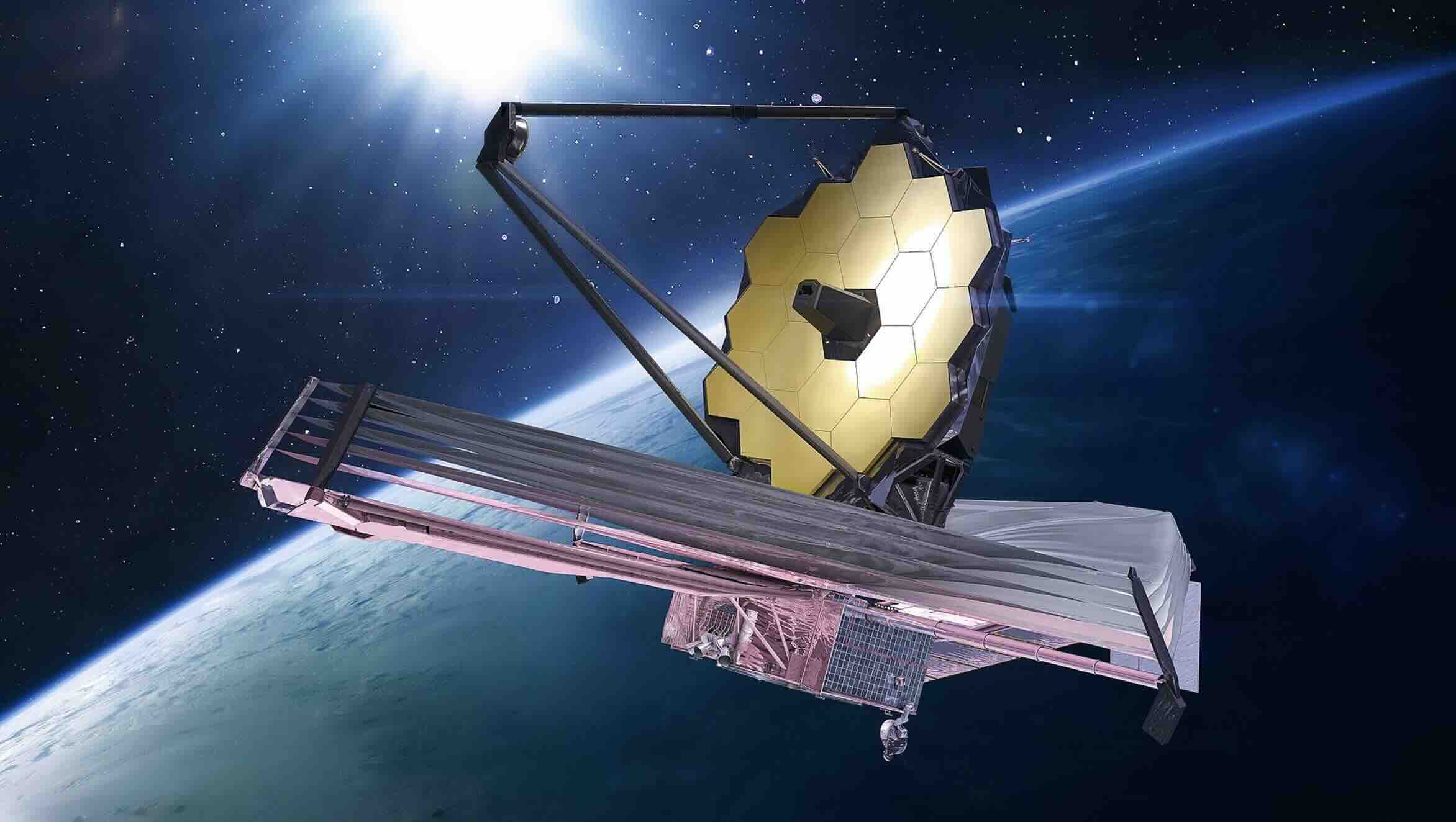
Artist's concept of NASA's James Webb Space Telescope (Credit: NASA/dima_zel)This week in stories from The Debrief... in a historic first, scientists have successfully characterized several surface features on a nearby "Super-Earth." Meanwhile, ancient people in the eastern Pyrenees were doing something long ago that archaeologists never expected... and finally, deep in our evolutionary history, one of our oldest relatives had a single eye that researchers now point to as the "cyclops" organ behind modern vision.
In addition to these stories, here's a look at others we're covering right now at The Debrief:
- Something Deep in the Ocean is Causing Global Sea Levels to Rise—Now Scientists Reveal What’s Driving the Anomaly Scientists tracking factors driving a global rise in sea levels in recent years say a key missing piece in the puzzle may have finally been revealed.
- Volcanic Apocalypse? New Research Pushes Back on the Younger Dryas Impact Hypothesis New research challenging the Younger Dryas Impact Hypothesis argues volcanic activity likely caused the final cold spell of the last ice age.
- The Body Gap: Researchers Warn AI Lacks the Physical Grounding That Shapes Human Thought UCLA researchers have identified the ‘Body Gap’ as a key limitation in modern Artificial Intelligence systems.
- Genetic Research Reframes Archaeological Understanding of How the Germanic People Arose 1500-Years-Ago in the Roman Collapse European genetic research offers surprising insights into who lived along the Roman frontier as the empire fell and Germanic peoples arose.
- A “Transdimensional” Anomalous Hall Effect Has Been Observed for the First Time—Here’s What That Could Mean Scientists report the discovery of a "transdimensional anomalous Hall effect" revealing an unusual behavior in a new kind of layered graphene.
- Scientists Unlock Elusive Quantum Effect Long Considered Theoretical in Breakthrough Experiment A once-theoretical quantum interaction has been achieved in a breakthrough laboratory experiment by University of Oxford researchers.
- Clean Energy Breakthrough: Scientists Have Discovered “Something Interesting and Unknown” in This Novel Material UK researchers have made a clean energy breakthrough, discovering new “in-between states” that form as precursors break down when heated.
- Archaeologists Just Discovered a Fragment of Homer’s Iliad Inside an Ancient Egyptian Mummy In a historic first, archeologists excavating an ancient Egyptian tomb have found a fragment of Homer's poem The Iliad embalmed with the mummy.
- 2000-Year-Old Amazonian “Dark Earth” Causes Mysterious Plant Growth at Accelerated Levels, Baffling Researchers Unusual patches of black Amazonian soil rich in nutrients known as "dark earth," which rapidly accelerates plant growth, remain one of the region's greatest mysteries.
- Massive Study Shows Overwhelming Support for Federal Cannabis Reform Amid Culture Shift A peer-reviewed study involving more than 40,000 public comments finds overwhelming support for the recent U.S. federal shift on cannabis.
- “The Foundations for a New Generation of Light‑Based Technologies”: Scientists Uncover ‘Hidden’ Property of Light That Allows it to Spin and Twist Scientists have discovered a 'hidden property' of light that could lead to a new generation of light-based and quantum technologies.
- Astronomers May Have Found Remnants of a Lost Galaxy Named “Loki” Hidden in the Milky Way Ancient stars near Earth may be remnants of a lost galaxy called Loki, revealing clues about the Milky Way’s violent past.
archaeology•astronomy•breaking news•James Webb Space Telescope•newsletter•pyrenees•science•Super-Earth•technology•Younger Dryas
Comments

Powered by RoundtableBuilt on infrastructure designed for real-time media. Learn more at RTB.io.© Roundtable 2026. By using this site you agree to the Terms of Use and Privacy Policy